Tuesday, 12 February 2013

Eyelashes, Eyeliner and More Eyelashes!

The Sixties saw a new way of creating your own image. Using your makeup, hair and fashion to create a style and a specific look of your choice.
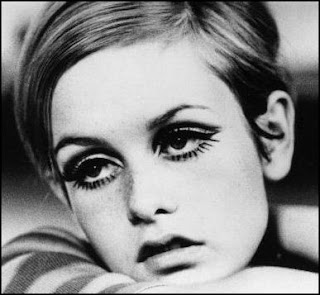
 The children of the revolution were taking over. The classic pin up style women and war wives were being over looked. The red lipstick has been wiped off and covered with nude. The creation of eyelashes was huge in the 60's and dramatic eyes and eyebrows connected to a short sharp hair cut was the desired image in this time.

Twiggy was a huge style icon in Britain and all over the world. As the image below shows of her makeup image tutorial, this look was extremely popular.


After rationing and the world war blues, Britain became consumer crazy in the 1960's. With the increase in televisions in homes, adverts like these two below, it would entice women to spend more and more money on their image.


All about the HAIR!

The sixties has to be my favourite era for fashion, hair and makeup. And in the 1960's Vidal Sassoon, British hairdresser, was the man to change the way women would style themselves! He was one of the most inspiration hair stylists of all time. He revolutionised hairdressing by creating the most iconic of looks such as sharp geometric cuts, chic bobs and pixie crops.

Moving away from the rollered waves of the 50s.

The sleek, straight and new look was born. The sixties was the birth of popular culture, a new generation and fashion which was highly influenced by pop music. Fashion was being taken over by the kids!

Mary Quant and Vidal Sasson


Mia Farrow's pixie crop


Nancy Kwan's cut by Vidal Sassoon


Asymmetric Bob created by Vidal Sassoon


Could I show Jeanette's rebellion in her teens through the dramatic change of haircut?

Moving on from the 60's, hairstyles throughout the 1970's was all about low maintenance due to the cultural changes. Their time was moving on from being housewives in the 40's and 50's who had the time to take extra care with their hairstyles into a new era where women were now working and earning for themselves.
It was all about natural waves and curls with hair accessories like headbands were becoming increasingly popular.
The 70's was highly influenced by the change in music. It was time when your could express your personality and likes through the way your dressed. The pop band ABBA had a huge influence on hair styles for both men and women.


As well as music influences, film and television stars such as Charlie's Angels Farrah Fawcett became a style icon with her natural beauty and long, blonde curly hair.

Actress Meryl Streep soon became one of the most well known style icons of the 70's with her sleek, long and blonde desirable locks.


Jerry Hall, one of the most famous models on the 70's. She worked on campaigns for Revlon and Yves Saint Laurent and her hair was famously known as the perfect 'undone' look for this era..

The History

Through out Oranges are not the only fruit, Jeanette tells the story of her life set in the 1960's and the 1970's.

The 1960's is said to be ones of the most dramatic era's of time when it comes to change politically, scientifically and socially. But was it necessarily for the better?

At the start of the sixties, the Conserative Government was in charge of Britain's politics up until 1964 when the Labour party was voted until 1970. In the book, Jeanette speaks of how "at election time in a Labour mill town she put a picture of the Conservative candidate in the window." But it seems when we think back to the sixties, all we can envisage is the image. The fashion. The hair and makeup. The look was fabulous but it seems politics and the economy maybe have been plastered over with layers of fabrics and bright colours.

'What did they want? Everything. When did they want it? Now. When would we pay? Later". Quoted from the BBC documentary below.

This video gives a more alternative insight into the amazing 'Swinging Sixties' that you can read about today. But is this more of a realistic perspective rather than the shiny and perfect era we been lead to believe?


On the other hand there were incredible discoveries...


Development in hospitals and the NHS raised dramatically and the first heart transplant was performed in 1967. Improvement in health conditions of the general public.

The sixties saw the first man in space and then in 1969 the first humans walked on the moon. Could this have inspired people to truly for fill their dreams, and that is anything possible?

England won the world cup in 1966, an amazing achievement after the pain and sorrow of the second world war. Raising hope and more of a patriotic society.
 
Communications improved dramatically. The audio cassette was invented, Sony launched it's video recorder and the first Touch-Tone telephones were introduced.
This decade saw a strong increase in televisions in the home, classic programs such as 'Corrination Street' and 'Dr Who' being aired, the first colour screen channel and the launch of BBC 2.

The 1970's saw even more development with technology such as the walkman stereo's, mobile phones and emailing. Technology took a dramatic speed up where communication became easier and more accessible.

Coal mines were shutting down due to the decrease in need for coal. Instead electricity would come from power stations burning oil or gas. This began the decrease in jobs and slowly a recession developed making the living standards of the working class harder.
1970s power plant makes way for cleaner energy

Home is where the heart is...

In order to portray my character in a realistic and meaningful way through makeup and hair styling, I need to take a deep insight into her life so I can really understand her... Most importantly I need to understand where she lived, what time period and how this would have affected her as a person.

Jeanette Winterson was born on the 27th of August 1959 and was adopted by Constance and John William Winterson on the 21st of January 1960. She lived in Manchester throughout her entire childhood and teenage year, these are the most crucial years of becoming your own person.

Exterior 
I've been researching what the houses looked like in Manchester at this time in the areas which are mentioned throughout the novel.


Here is an image of children playing down a back alley way. As you can see these houses are practically back to back and the house size is very standard with small gardens. This suggests that this area, like the one Jeanette lived it, is working class.

1. Saturday Night and Sunday Morning (1960)

I found this image above online on a University of Nottingham's website where the featured the exhibition on Alan Stillitoe's 'Saturday Night and Sunday Morning'. They show a range of still images from the era, capturing his life. The cobbled streets, brick walls and old styled lamp posts show how middle class and working class houses looked like in England around the 60's. This gives me an insight into the kind of place Jeanette Winterson grew up.


This image is one of the road where 'Corrination Street' was set in the 60's showing the sizes of houses on a standard road in Manchester. As you can see they are small and very close together, and the brick work gives off the impression that inside is cramped and the walls are thin.


Tower blocks were built to solve the problems with the shortage of houses after the second world war like the one shown above.

Interior

Jeanette spent most if not all of her time either at home or at church, therefore finding out about the interior of houses in this period of time is crucial in uncovering what she must have experienced growing up.


preview

Whilst I was browsing through classic 60's decor in Britain, I came across this website which features two images of actual house advertisements in Britain in the 60's.
I found this wonderful image advertising ceramic floor tiles which were obviously becoming popular in this period of time for kitchens. The 60's is well known for it's bright and wonderful colours in clothing and clearly in houses too. However, I have a feeling due to Jeanette's Mother being brought up in the 30's and 40's, the interior of her house may have been a lot less bright and colourful.    http://www.advertisingarchives.co.uk/en/page/show_home_page.html


Finally I found this image online from a woman who had taken photo's of her grandmothers house which has stayed more or less the same since the 60's. I loved the old style cooker in this photograph, it really gives you an image of how kitchens and houses would have looked in that era.

Did you know the standard house was priced around £2,500? 

Oranges are not the only fruit...

Oranges are not the only fruit is a semi-autobiographical novel by Jeanette Winterson. A book which gives us an insight into her up bringing into the world, facing the struggles with good and evil, sexuality and her discovery towards her own identity.


Jeanette tells the story of how she was brought up in the 1980's in Yorkshire by her adoptive parents, dominantly by her fundamentalist Christian Mother. Taught at home up until the age of seven, it is clear she has been brought up in a very particular way. Throughout the text, we explore the relationships she has and new ones she makes during her teenage years. These include characters such as Melanie - her first lover, Elsie - an older lady from the church and most importantly relationship which she has with her Mother. 

My aim is to create three high fashion editorial images which show development of the main character Jeanette throughout the novel, representing her life through makeup, styling and hair design. This blog will be filled with strong research (both primary and secondary), knowledge and understanding which I have built up over time. This will be the foundations of my project, where I develop my ideas and progress onto creating strong and powerful images.